
Presentations
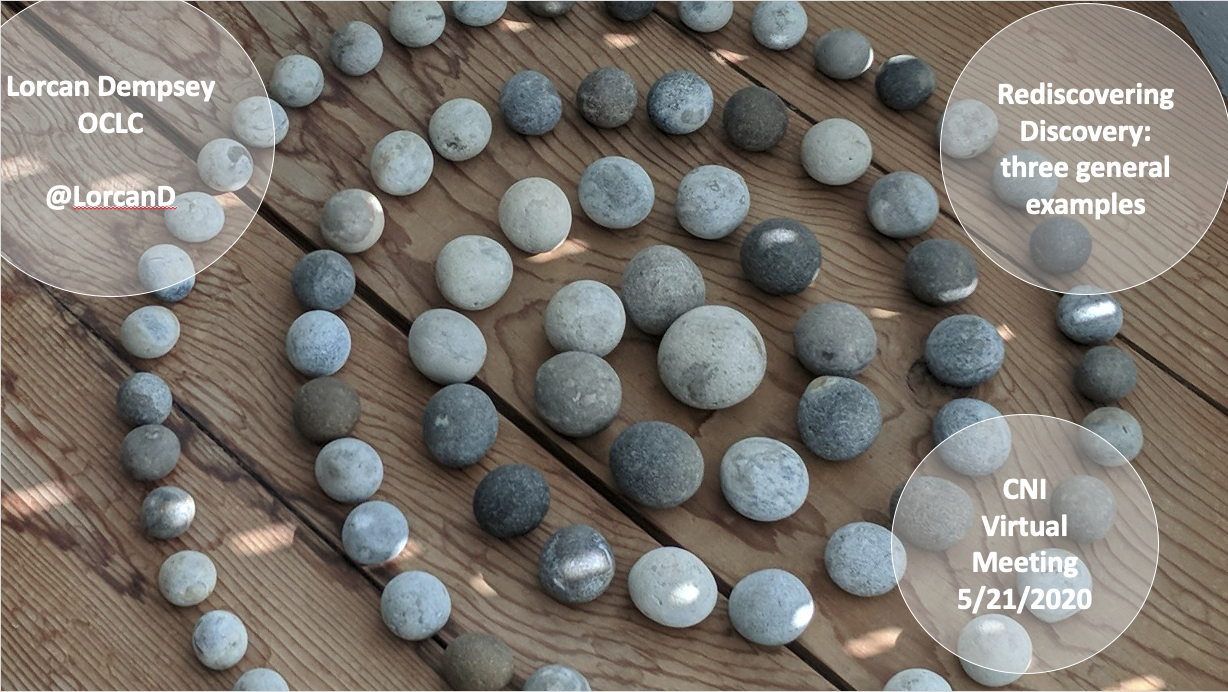
Rediscovering Discovery: three general examples
virtual
This presentation accompanied a panel discussion of current trends and issues in discovery systems, including a description of value-added full-text linking features, user behaviors and needs identified by transaction log analysis, the implementation of artificial intelligence and machine learning technologies in discovery, and plans by the Big Ten Academic Alliance for a collective collection system.
Recording available from CNI on Vimeo
Topics: Collective Collections, Library Trends

Total Cost of Stewardship: Tools from the OCLC Research Collection Building & Operational Impacts Working Group
virtual
Weber shares the suite of tools created by the OCLC Research Library Partnership’s Collection Building and Operational Impacts Working Group, designed to support shared, informed collection building decisions for special collections that factor in the full resources required for ongoing stewardship of a potential acquisition.
Recording available from CNI on Vimeo.
Topics: Archives and Special Collections

Lost in Transcription—Developing workflows for captioning video (video)
View this webinar to learn about an investigation into captioning tools and potential workflows to address accessibility issues for digital video at scale.
Topics: Works in Progress, Archives and Special Collections, Equity, Diversity, Inclusion, Topics, AV Materials
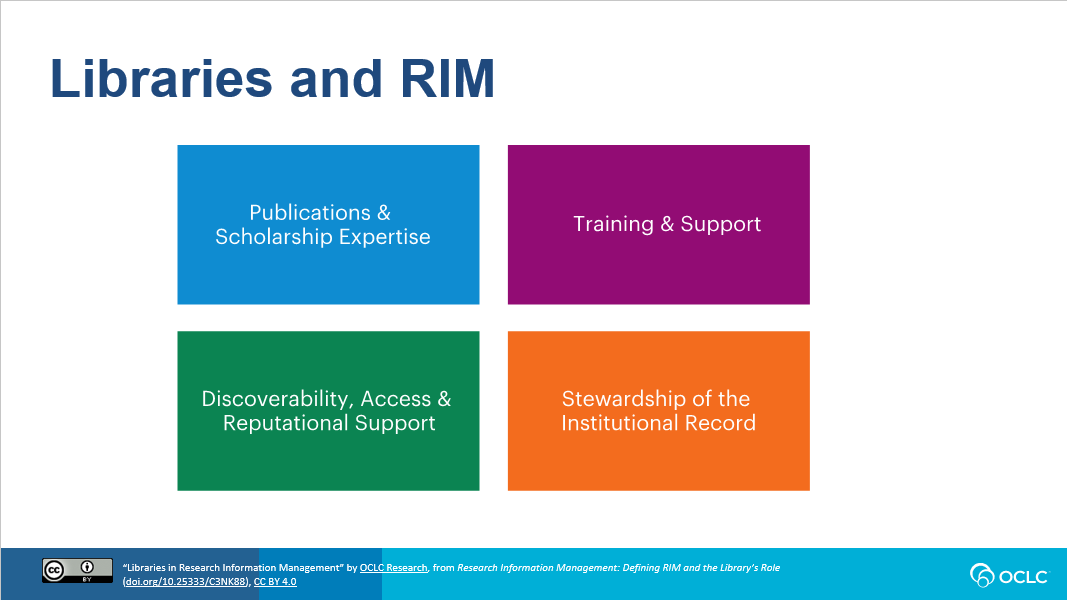
Research Information Management in the United States
virtual
Bryant shares highlights of her research into Research Information Management, particularly describing primary US cases, how American practices are distinctive from European—and indeed—global practices, and the importance of cross-institutional collaboration to ensure quality data and reduce workflow duplication.
Recording available from Florida Universities on Zoom.
Topics: Research Information Management

Approaches to Processing Audiovisual Archives for Improved Access and Preservation Planning (video)
This webinar explains University of Houston’s “enhanced for A/V” minimal processing mindset utilized to survey all A/V materials held by UH Special Collections, and ongoing efforts to create a standard practice for A/V materials in archival collections as they are acquired to ensure proper storage. The webinar concludes with a discussion of the impact this approach has had on continuing efforts to preserve and make available A/V collections at UH.
Topics: Archives and Special Collections, Works in Progress, Topics, AV Materials

Accessibility and Digital Collections (video)
This webinar highlights steps to choose and build an accessible digital collections infrastructure, with both commercial software and locally developed software.
Topics: Equity, Diversity, Inclusion, Works in Progress
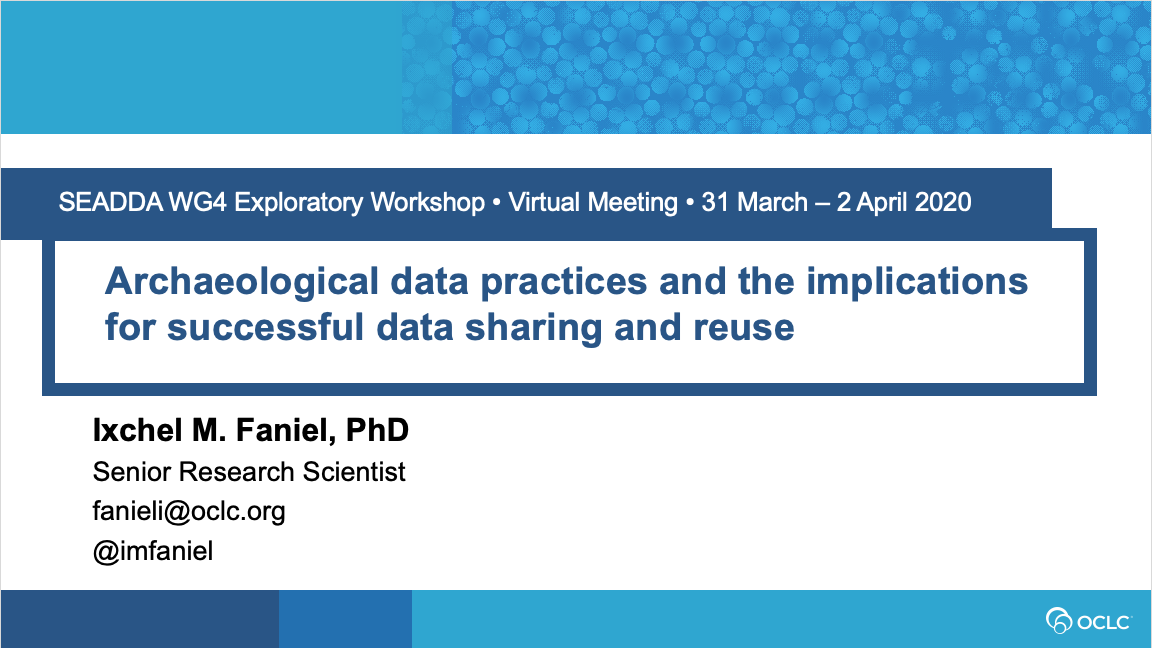
Archaeological data practices and the implications for successful data sharing and reuse
virtual
In this keynote presentation, Ixchel M. Faniel discusses findings from several studies examining archaeological data practices and needs and the implications for successful data sharing and reuse.
Keynote recording available from SEADDA.
Topics: User Research, Research Data Management, SLO-Data

Computational Uses of Audiovisual Materials at the Library of Congress
View this webinar to learn how the LC Labs team at the Library of Congress is currently experimenting with multiple ways to provide computational access to audiovisual materials.
Topics: Works in Progress, Archives and Special Collections, AV Materials
Cues and Clues—How Students Identify Online Resources in the Face of "Container Collapse" (video)
This presentation focuses on the search behaviors and demographic characteristics that impact students’ ability to identify the container of resources that they retrieved from a simulated Google search and is followed by a discussion on the implications for information literacy.
Topics: Research Methods, Works in Progress
Identifying Opportunities for Collective Curation During Archaeological Excavations
Dublin, Ireland
Archaeological excavations are comprised of interdisciplinary teams that create, manage, and share data as they unearth and analyze material culture. These team-based settings are ripe for collective curation, particularly among the excavation teams responsible for unearthing the materials and the specialists responsible for analysing them. Yet, findings from a study of four excavation sites show specialist data tend to remain unlinked and decontextualized from excavation data. This presentation highlights findings from the study, opportunities identified for collective curation, and responses from the four excavation projects.
Topics: Research Data Management, User Research, SLO-Data